

May. 19, 2026
Share
Roller spinning machines are widely used in modern metal forming industries to manufacture seamless, high-precision rotational components. From aerospace parts and pressure vessels to cookware, lighting products, and automotive components, roller spinning technology provides an efficient and cost-effective method for shaping metal sheets into complex symmetrical forms.
But how does a roller spinning machine actually work?
In this article, we explain the complete working process of a roller spinning machine step by step, including machine structure, forming principles, processing stages, and the advantages of CNC spinning technology in industrial manufacturing.
A roller spinning machine is a metal forming system that uses rotating rollers to gradually shape a flat metal blank or preformed workpiece over a mandrel.
During the spinning process:
The metal blank rotates at high speed
Spinning rollers apply controlled pressure
The material gradually flows along the mandrel shape
The final product forms without major material removal
Unlike cutting or casting processes, metal spinning reshapes the material while maintaining its structural continuity.
Common products made by roller spinning machines include:
Pressure vessel heads
Metal cones
Cylinders
Hemispherical parts
Lighting reflectors
Cookware
Musical instrument bells
Aerospace components
Before understanding the working process, it is important to know the key machine components.
The spindle rotates the workpiece at controlled speed during the spinning process.
Functions include:
Holding the mandrel
Driving workpiece rotation
Maintaining rotational stability
High-performance spindle systems are critical for forming precision and surface quality.
The mandrel is the forming mold that determines the final shape of the spun part.
Mandrels can be designed for:
Cylindrical parts
Conical parts
Hemispherical shapes
Complex contours
The metal blank is pressed against the mandrel during spinning.
Rollers apply pressure to deform the metal gradually.
Roller functions include:
Controlling material flow
Forming the workpiece shape
Maintaining wall thickness consistency
Modern CNC spinning machines may use single, double, or multiple rollers.
The tailstock secures the metal blank firmly against the mandrel during rotation.
Its functions include:
Preventing material slippage
Improving forming stability
Supporting heavy workpieces
Modern roller spinning machines use CNC automation for precise process control.
The CNC system manages:
Roller movement paths
Spindle speed
Feed rate
Pressure control
Multi-axis coordination
This ensures repeatable production accuracy.
The process begins with preparing the metal blank.
Common materials include:
Stainless steel
Aluminum
Carbon steel
Copper
Brass
Titanium
The blank is usually cut into a circular disc with the required diameter and thickness.
Material quality is important because defects can affect the final spinning result.
The metal blank is placed against the mandrel and secured using the tailstock or clamping system.
At this stage:
The blank is centered precisely
Clamping pressure is adjusted
Rotational balance is checked
Proper alignment is essential for dimensional accuracy.
The spindle starts rotating the workpiece at a controlled speed.
Rotation speed depends on:
Material type
Part diameter
Material thickness
Product complexity
Stable rotational speed ensures smooth metal deformation.
The spinning roller gradually moves toward the rotating blank and begins applying pressure.
The roller:
Pushes the material against the mandrel
Controls metal flow direction
Gradually reshapes the blank
The deformation occurs progressively rather than instantly.
As the roller moves along programmed paths, the material slowly conforms to the mandrel shape.
During this stage:
The metal stretches and compresses
Wall thickness may slightly change
Surface smoothness improves
Internal stresses are controlled
CNC systems precisely coordinate roller pressure and movement.
Complex parts may require multiple spinning passes.
After rough forming, finishing passes improve dimensional precision and surface quality.
Final calibration ensures:
Accurate dimensions
Smooth contours
Uniform wall thickness
Better roundness
This stage is critical for high-precision industrial applications.
Once spinning is complete:
The spindle stops rotating
The finished part is removed
Surface and dimensional inspections are performed
Quality control may include:
Diameter measurement
Thickness testing
Surface inspection
Balance testing
The finished component may then proceed to polishing, trimming, welding, or coating processes.
In conventional spinning:
Material thickness remains relatively constant
The diameter changes gradually
Common for decorative and thin-wall components
Applications include cookware and lighting products.
In shear spinning:
Wall thickness is intentionally reduced
Material elongates along the axial direction
Higher strength-to-weight ratio is achieved
Widely used in aerospace and defense industries.
Flow forming is an advanced spinning process used for precision cylindrical components.
Advantages include:
Excellent dimensional accuracy
Improved material strength
Thin-wall manufacturing capability
Common applications include aerospace tubes and automotive components.
Metal spinning minimizes material waste compared with machining or cutting processes.
Spun components often have fewer welds, improving structural integrity and pressure resistance.
Compared with deep drawing or stamping, spinning tooling is more economical for customized or low-volume production.
Roller spinning creates smooth surfaces with minimal post-processing requirements.
Roller spinning machines can produce:
Small prototypes
Medium-batch production
Large industrial components
Custom-shaped products
Roller spinning technology is widely applied in:
Aerospace manufacturing
Pressure vessel production
Medical equipment manufacturing
Automotive industries
Lighting equipment production
Musical instrument manufacturing
HVAC systems
Cookware manufacturing
Energy industries
Modern CNC spinning machines provide major advantages over traditional manual spinning systems.
Benefits include:
Higher production efficiency
Improved precision
Automated operation
Reduced labor costs
Better process repeatability
Complex shape capability
CNC automation also enables manufacturers to produce high-precision custom components more efficiently.
Roller spinning machines are highly efficient metal forming systems capable of producing seamless, high-strength, and precision rotational components for various industries. By using controlled roller pressure and high-speed rotation, these machines gradually shape metal blanks into complex forms with excellent material utilization and surface quality.
From simple cones to advanced aerospace components, CNC roller spinning technology continues to play an increasingly important role in modern industrial manufacturing.
If you are looking for advanced CNC roller spinning machines for your production needs, our team can provide customized solutions for different materials, product sizes, and industrial applications.
Need professional roller spinning machine solutions?
Contact us today for:
CNC spinning machine specifications
Custom equipment design
Technical consultation
Automation solutions
Competitive quotations
Global engineering support
Latest News in CNC Spinning Machine
Learn More
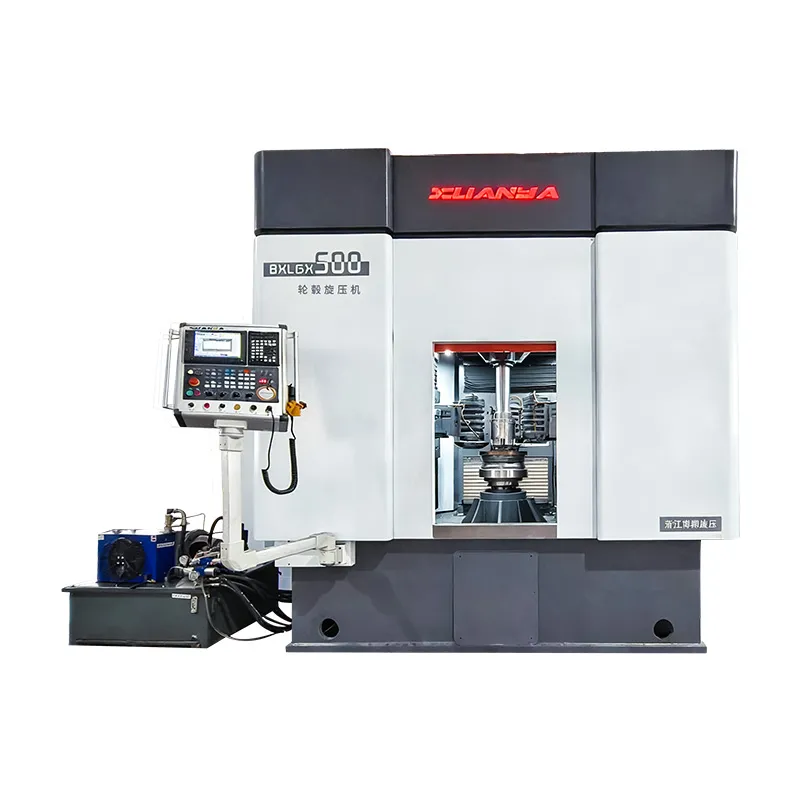
Single Roller vs Multi Roller Automatic Spinning Machine
Choosing the right Automatic Spinning Machine is not simply a matter of comparing roller quantities. Textile manufacturers must also consider yarn quality, production capacity, fiber compatibility, energy use, maintenance workload, operator skill, machine stability, and the total cost of ownership. For buyers comparing single roller and multi roller designs, Boxiang provides a useful starting
Oct. 15, 2026
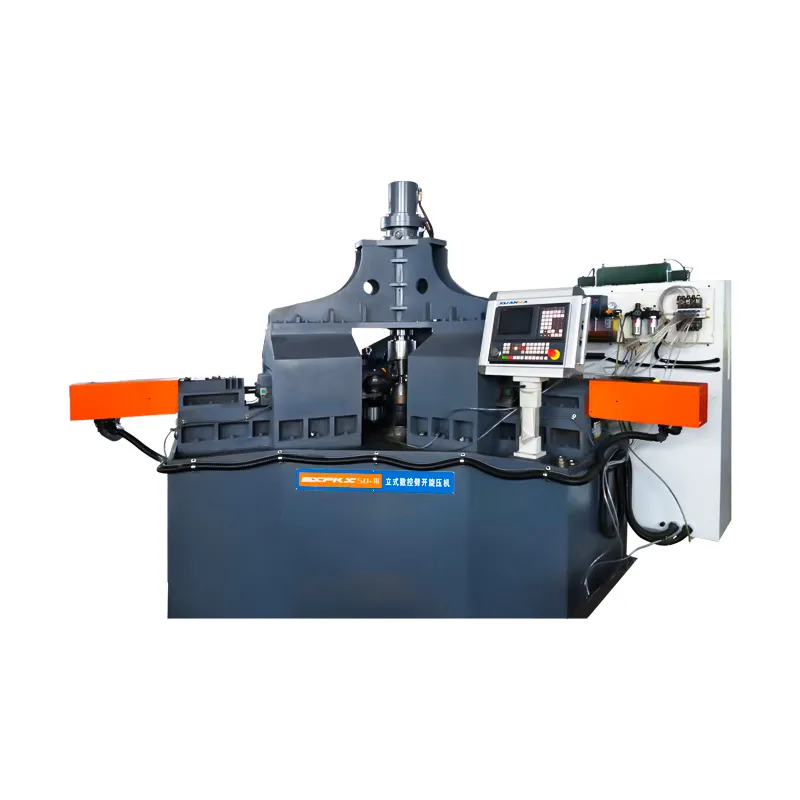
Roller Spinning Machine for Pressure Vessel Manufacturing
A Roller Spinning Machine for Pressure Vessel Manufacturing is a CNC metal-forming machine that uses one or more powered rollers to shape a circular metal blank over a mandrel. It produces pressure-vessel heads, hemispherical ends, conical sections, and other axisymmetric components with controlled wall thickness and repeatable geometry. For manufacturers, the machine can reduce welding, improve
Oct. 14, 2026
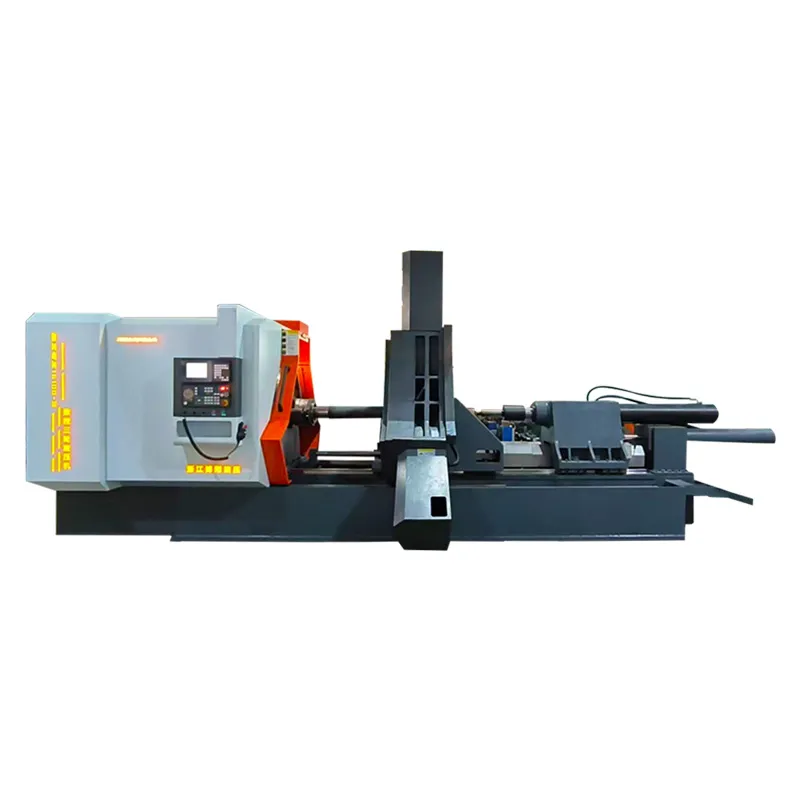
What to Look for When Buying an Automatic Spinning Machine
Manufacturers use Multifunctional CNC Spinning Machines to form round metal parts with controlled pressure instead of cutting away most of the material. This process supports repeatable production of lamps, cookware, aerospace parts, pressure vessels, and automotive components. A CNC metal spinning machine can store tool paths, control spindle speed, and repeat the same profile across many parts.
Oct. 13, 2026
Hot Products
Get the latest solutions for your business from your trusted CNC machine manufacturer
Contact Now


