

Oct. 12, 2026
Share
Choosing the right Roller Spinning Machine can determine your forming accuracy, production cost, cycle time, and long-term equipment reliability. In this guide, we at Boxiang explain a simple, practical process: define your workpiece, calculate forming requirements, compare machine specifications, verify quality evidence, and complete a controlled acceptance test before purchase.

Roller spinning, also known as flow forming or metal spinning in some applications, uses controlled roller movement to shape a metal blank over a mandrel. The process is widely used for cylindrical, conical, axisymmetric, and thin-wall components.
A machine that is too small may produce excessive vibration, dimensional drift, or premature spindle wear. A machine that is too large can increase capital expenditure, energy consumption, tooling cost, and floor-space requirements without improving your actual output.
The correct selection should therefore be based on measurable production data rather than machine appearance alone. We recommend evaluating:
Before comparing machines, create a workpiece data sheet for every critical component. This prevents a common purchasing error: selecting equipment based only on maximum diameter while ignoring wall thickness, material hardness, or axial forming length.
| Parameter | What to Record | Why It Matters |
|---|---|---|
| Blank diameter | Minimum and maximum outside diameter | Determines machine swing and tooling range |
| Finished diameter | Final inside and outside dimensions | Defines mandrel and roller positioning |
| Material thickness | Initial and final wall thickness | Determines forming force and reduction capability |
| Part length | Maximum axial forming length | Influences travel, rigidity, and cycle time |
| Material grade | Aluminum, stainless steel, copper, titanium, or alloy steel | Determines spindle torque and roller force |
Also identify whether the component requires shear spinning, conventional spinning, flow forming, necking, flanging, or multiple operations. A supplier should review the complete process route, including blank preparation, lubrication, preforming, final forming, trimming, and inspection.
Machine capacity must include more than the advertised maximum workpiece diameter. We suggest checking the following technical specifications with Boxiang before requesting a quotation:
For many industrial applications, Double Roller CNC Spinning Machines provide better process balance and productivity than a basic single-roller configuration. Two rollers can distribute forming loads more effectively and may help reduce deformation, tool deflection, and cycle time when the process is correctly engineered.
Double Roller CNC Spinning Machines are particularly suitable for manufacturers that need repeatable production of medium- to high-volume axisymmetric parts. CNC interpolation allows the machine to control roller position, feed rate, spindle speed, and forming sequence with greater consistency than manual operation.
However, CNC capability does not automatically guarantee a good part. The machine must have adequate structural rigidity, servo response, hydraulic performance, toolpath control, and process validation. We recommend asking Boxiang to demonstrate a sample part using your actual material, blank thickness, mandrel geometry, and target tolerance.
Precision claims should be supported by inspection records and acceptance criteria. When reviewing a Boxiang Roller Spinning Machine, ask how the manufacturer verifies spindle runout, axis positioning, roller alignment, hydraulic stability, and finished-part accuracy.
Useful evidence may include:
For the finished product, define an inspection plan that may include dimensional measurement, wall-thickness mapping, surface-finish inspection, hardness testing, and leak testing. If the part is used in pressure, automotive, aerospace, or structural applications, specify the applicable customer or industry standard in the purchase contract.
The appropriate standard depends on the material and end-use application. Common references may include ASTM material and testing standards, DIN dimensional or material standards, ISO quality-management requirements, and customer-specific technical specifications. For example, ASTM standards may apply to metal chemistry, tensile properties, hardness, or corrosion testing, while DIN or ISO documents may define dimensional and quality requirements.
Do not accept a general statement such as “high quality” without a measurable acceptance criterion. A stronger specification could require dimensional accuracy to a defined tolerance, a documented 100% inspection plan for critical features, and a written response to nonconformities within 24 hours.
When comparing Boxiang equipment with alternative suppliers, use a technical comparison sheet rather than comparing only the purchase price. The following format helps identify the real total cost of ownership.
| Evaluation Area | Questions to Ask Boxiang | Business Impact |
|---|---|---|
| Product range | What are the maximum diameter, thickness, and forming length? | Prevents capacity limitations |
| CNC system | Which controller, servo drives, and programming functions are included? | Influences setup time and operator training |
| Tooling | Are mandrels, rollers, chucks, and custom fixtures included? | Controls startup cost and lead time |
| Quality assurance | Are inspection reports and acceptance-test records provided? | Reduces commissioning risk |
| Service | What installation, training, spare-parts, and 24-hour response options are available? | Minimizes production interruption |
| Operating cost | What are the power, hydraulic, lubrication, and maintenance requirements? | Improves lifecycle cost forecasting |
For export buyers, also confirm electrical standards, voltage and frequency, control-panel language, packaging, lifting points, installation requirements, customs documents, and replacement-part availability.
The lowest quotation is not necessarily the most economical choice. We calculate the total cost of ownership using the following categories:
A machine that reduces scrap by even a few percentage points may deliver greater savings than a lower initial purchase price. During the quotation stage, ask Boxiang to estimate cycle time, expected material utilization, tooling life, and recommended preventive-maintenance intervals for your specific component.
Before shipment or final payment, we recommend completing a factory acceptance test. The test should use the production material and tooling whenever possible.
After installation, repeat the same checks during a site acceptance test. Keep the signed reports as part of your quality documentation and equipment history.
A large workpiece diameter does not necessarily mean a large forming load. Material strength, thickness reduction, roller geometry, feed rate, and lubrication all affect force. Ask for forming-force calculations or a sample trial instead of relying on diameter alone.
Uneven thickness can result from blank eccentricity, incorrect mandrel alignment, insufficient machine rigidity, roller deflection, or an unsuitable toolpath. Corrective actions include improving blank centering, checking spindle and mandrel runout, optimizing roller attack angle, and using a controlled multi-pass strategy.
Complex CNC equipment can underperform when programming and setup procedures are unclear. Request training, sample programs, tool-offset instructions, alarm lists, and preventive-maintenance manuals from Boxiang. A standardized setup sheet can reduce changeover errors and improve production consistency.
Mandrels and rollers are often application-specific. Confirm material, heat treatment, coating, dimensional tolerance, and expected service life before ordering. For repeat production, maintain a spare-tooling plan for critical forming components.
Define technical support requirements before purchase. Include response time, remote troubleshooting, spare-parts availability, warranty scope, and escalation procedures. A written 24-hour response commitment for production-critical issues can provide greater protection than a general service promise.
We recommend preparing these resources before contacting Boxiang:
For manufacturers evaluating Double Roller CNC Spinning Machines, these documents allow Boxiang engineers to recommend a configuration based on actual process conditions rather than assumptions.
Boxiang can support buyers who need a Roller Spinning Machine for precision metal forming, repeat production, and customized tooling. When requesting a proposal, provide your part drawings and process data so the recommended machine can be matched to your real operating conditions.
Ask Boxiang to clarify machine capacity, roller force, CNC functions, tooling design, inspection methods, installation support, spare parts, and acceptance criteria. If your business requires stable high-volume production, include Double Roller CNC Spinning Machines in the technical evaluation and compare their productivity, forming stability, and lifecycle cost with other configurations.
Before placing an order with Boxiang, review these key steps:
By following this process, we can reduce purchasing risk, improve forming consistency, and select a Boxiang Roller Spinning Machine that supports measurable business results. Contact Boxiang with your drawings, material specifications, production volume, and tolerance requirements to begin a practical machine evaluation.
Latest News in CNC Spinning Machine
Learn More
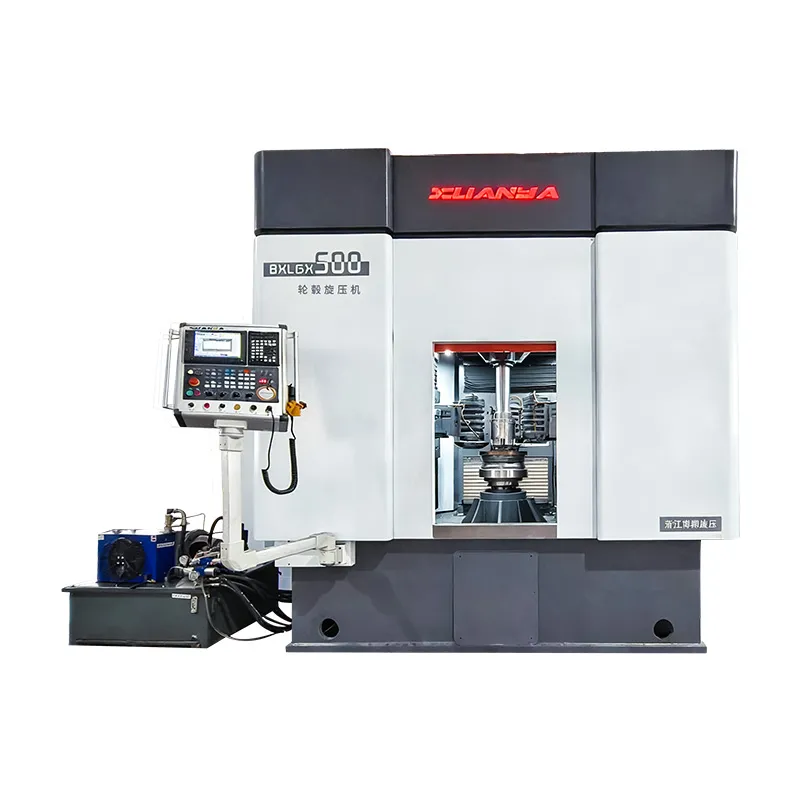
Single Roller vs Multi Roller Automatic Spinning Machine
Choosing the right Automatic Spinning Machine is not simply a matter of comparing roller quantities. Textile manufacturers must also consider yarn quality, production capacity, fiber compatibility, energy use, maintenance workload, operator skill, machine stability, and the total cost of ownership. For buyers comparing single roller and multi roller designs, Boxiang provides a useful starting
Oct. 15, 2026
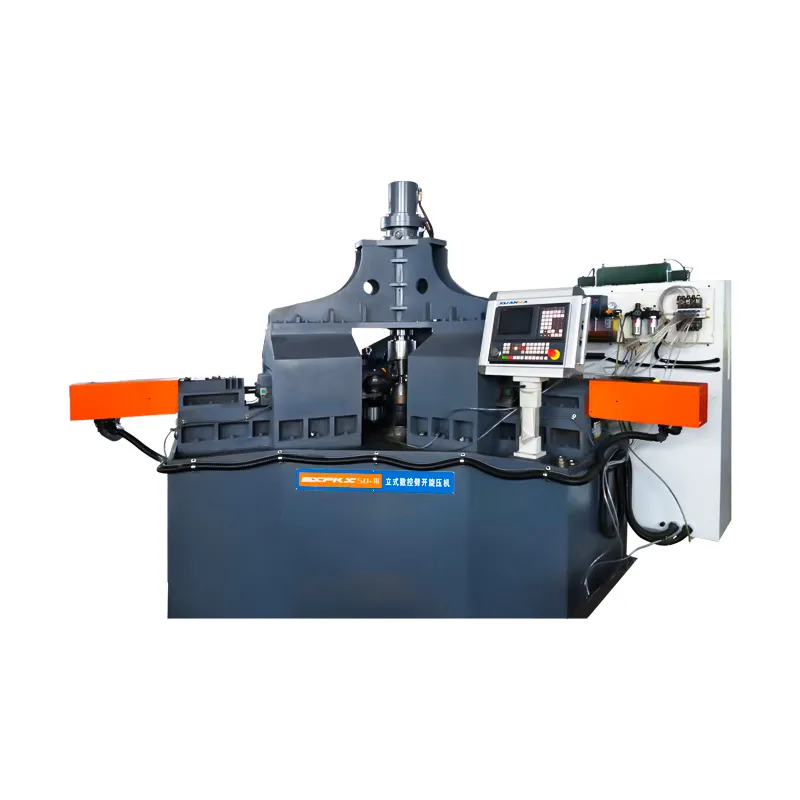
Roller Spinning Machine for Pressure Vessel Manufacturing
A Roller Spinning Machine for Pressure Vessel Manufacturing is a CNC metal-forming machine that uses one or more powered rollers to shape a circular metal blank over a mandrel. It produces pressure-vessel heads, hemispherical ends, conical sections, and other axisymmetric components with controlled wall thickness and repeatable geometry. For manufacturers, the machine can reduce welding, improve
Oct. 14, 2026
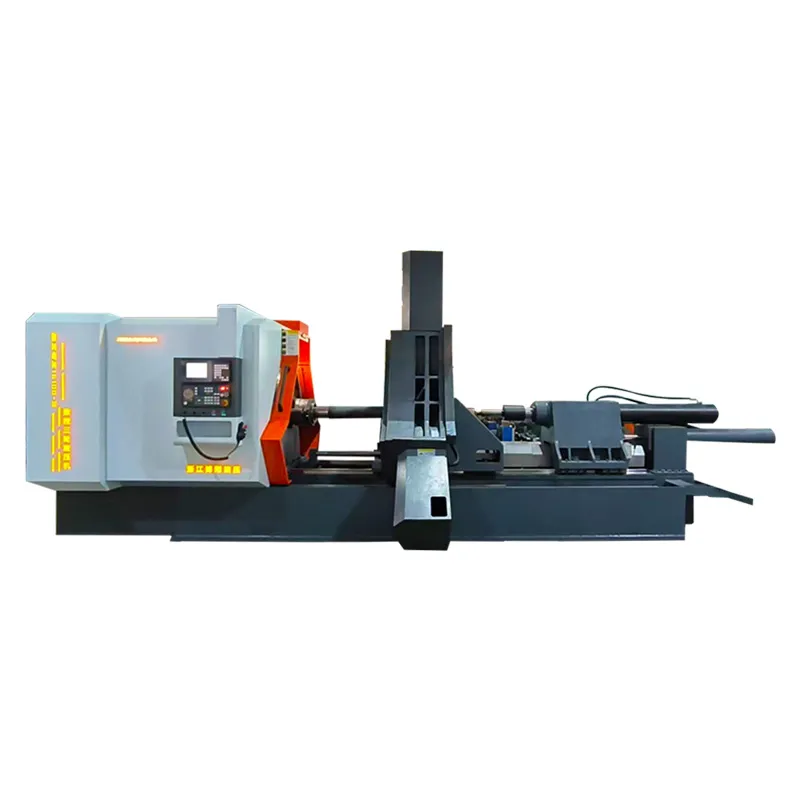
What to Look for When Buying an Automatic Spinning Machine
Manufacturers use Multifunctional CNC Spinning Machines to form round metal parts with controlled pressure instead of cutting away most of the material. This process supports repeatable production of lamps, cookware, aerospace parts, pressure vessels, and automotive components. A CNC metal spinning machine can store tool paths, control spindle speed, and repeat the same profile across many parts.
Oct. 13, 2026
Hot Products
Get the latest solutions for your business from your trusted CNC machine manufacturer
Contact Now


