

May. 21, 2025
Share
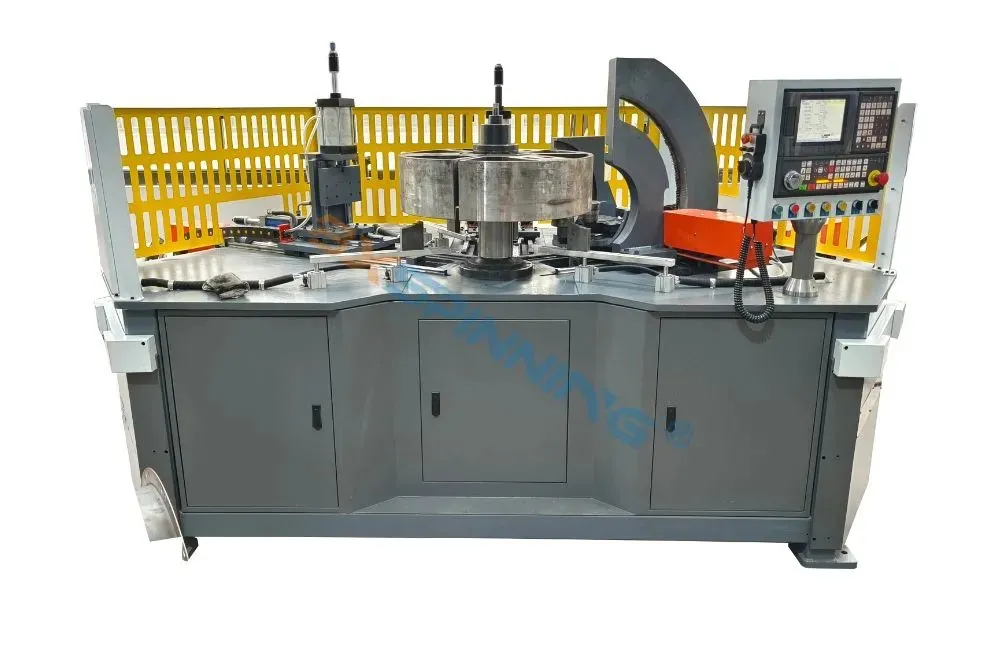
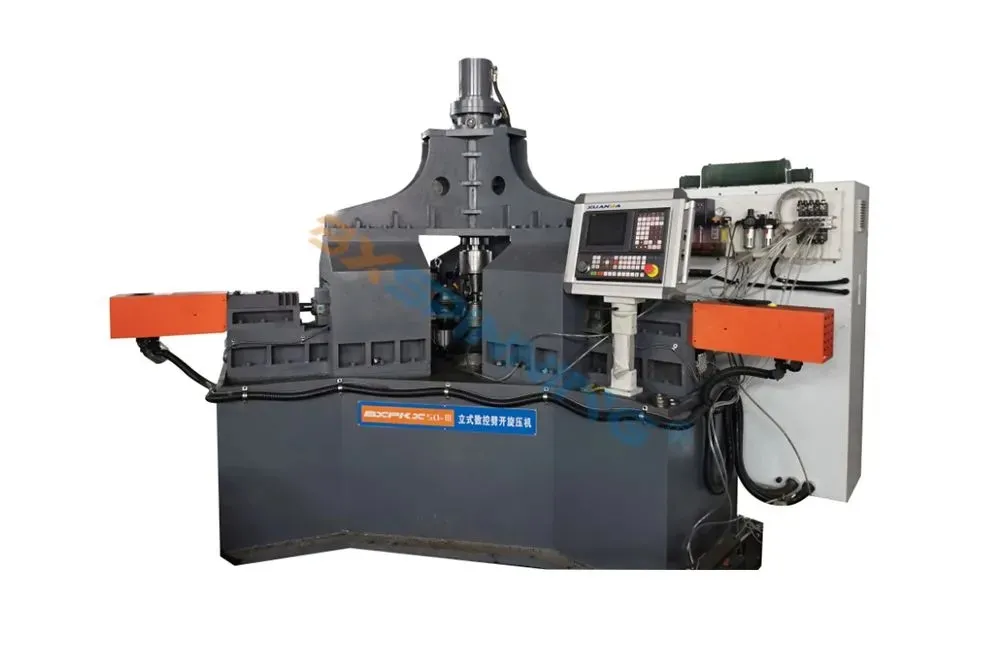
CNC spinning machines are large precision equipment, differing significantly from other machine tools in structure and performance. A CNC spinning machine typically consists of a mandrel with a main spindle, spinning wheels with wheel frames, control systems, tailstocks, and a bed. The mandrel-spindle assembly, spinning wheel-frame system, and wheel control devices are considered the three core structures. These components feature compact internal designs, requiring unique installation methods compared to conventional machines.

1. Mandrel and Main Spindle
CNC spinning machines generate exceptionally high rotational forces, requiring the main spindle to withstand substantial radial and axial loads. For stable workpiece installation, flanges and conical supports are commonly used. To eject finished parts, an ejection mechanism is integrated—a push rod driven by a hydraulic cylinder to eject spun parts from the mandrel.
2. Spinning Wheels and Wheel Frames
The wheel-frame assembly distinguishes CNC spinning machines from standard lathes. Wheels are axially fixed to wheel arms, which are then mounted on frames. For high-volume production, dual wheels may be tandem-mounted without altering frame positions.
3. Wheel Control System
Beyond manual operation, wheel control typically employs hydraulic or electro-hydraulic servo valves for multi-pass profiling. A movable template gradually rotates to guide the profiler, synchronizing wheel movements until they match pre-programmed paths. The template supports linear, rotational, continuous, or intermittent motions, adaptable to workpiece shapes and materials.
Supplementary Accessories
To enhance functionality for specialized tasks, auxiliary devices can be added:
● Centering mechanisms for workpiece alignment
● Trimming and flanging units
● Anti-wrinkle backup rollers for incremental sheet deformation
Complex-shaped workpieces—from material loading to forming, finishing, and unloading—can be processed via sequential control. However, CNC programming allows flexible adjustment of production sequences, optimizing manufacturing agility.
Latest News in CNC Spinning Machine
Learn More
Latest Automation Trends in Wheel Making Machines
As the automotive and transportation industries face a surge in demand for high-quality wheels, the significance of advanced Wheel Making Machines is increasingly pronounced. Manufacturers are grappling with issues such as inefficiencies in production, rising labor costs, and the need for compliance with stringent safety regulations. A recent report from ABC Industry Insights (2023) notes that
Sep. 11, 2026
Wheel Making Machine Production Lines: Key Equipment Explained
Wheel making machines are specialized industrial systems designed to produce high-quality wheels for vehicles, machinery, and other applications. These machines automate the fabrication process, ensuring precision, efficiency, and consistency, thus significantly enhancing production capabilities in the automotive and manufacturing industries. Utilizing advanced technology, wheel making machines
Sep. 10, 2026
How to Choose Wheel Making Machines for Different Wheel Types
There are various categories of wheel making machines available in the market. Each type is designed to cater to specific requirements:
Sep. 09, 2026
Hot Products
Get the latest solutions for your business from your trusted CNC machine manufacturer
Contact Now


