

Oct. 14, 2026
Share
A Roller Spinning Machine for Pressure Vessel Manufacturing is a CNC metal-forming machine that uses one or more powered rollers to shape a circular metal blank over a mandrel. It produces pressure-vessel heads, hemispherical ends, conical sections, and other axisymmetric components with controlled wall thickness and repeatable geometry. For manufacturers, the machine can reduce welding, improve dimensional consistency, shorten production cycles, and lower material waste when compared with multi-piece fabrication.
Boxiang develops industrial metal-spinning equipment for applications that require programmable forming, rigid machine structures, and process repeatability. The correct machine configuration depends on the vessel diameter, material grade, blank thickness, head profile, required production volume, and applicable pressure-vessel code.

Roller spinning is a chipless metal-forming process. A flat or preformed circular blank is clamped against a rotating mandrel while a forming roller applies controlled axial and radial force. The material flows plastically over the mandrel until it reaches the required profile.
In pressure-vessel production, the machine is commonly used to manufacture:
The primary commercial value is consistency. A CNC-controlled forming sequence can repeat roller paths, feed rates, spindle speed, and forming pressure for every production batch. This helps reduce profile variation, excess machining allowance, weld preparation, and rejection rates.
Pressure vessels operate under internal pressure, thermal cycling, corrosion exposure, and fatigue loading. Their end closures must therefore satisfy strict requirements for geometry, wall thickness, surface condition, and material traceability.
Traditional fabrication may involve cutting several segments, forming them individually, and joining them with circumferential or longitudinal welds. Roller spinning can create a seamless or near-seamless axisymmetric component from one blank, depending on the design and forming route.
These advantages are especially important for manufacturers producing LPG vessels, air receivers, industrial storage tanks, heat exchangers, cryogenic vessels, and process-equipment components.
Metal spinning began as a manual craft in which an operator formed sheet metal over a rotating wooden or metal former. The process later adopted hydraulic slides, powered spindles, programmable controls, and computer-aided manufacturing.
The development of CNC technology changed spinning from a highly operator-dependent operation into a repeatable production process. Modern machines can coordinate spindle rotation, roller feed, forming depth, and multiple passes. This is particularly valuable for pressure-vessel manufacturers because production records and repeatable parameters support process qualification and quality audits.
Today, Double Roller CNC Spinning Machines are widely considered for demanding parts because two forming rollers can balance forming forces and improve process stability. Depending on the machine design, the rollers may operate symmetrically or follow independent CNC-controlled paths.
The process starts with the vessel drawing, material certificate, design pressure, design temperature, corrosion allowance, and applicable code. Common materials include carbon steel, stainless steel, aluminum alloys, and nickel-based alloys.
Before forming, the manufacturer should confirm:
The mandrel defines the internal profile of the pressure-vessel head. Its geometry must match the approved engineering drawing, including crown radius, knuckle radius, tangent line, and flange dimensions.
Tooling accuracy is critical. A machine may offer positioning resolution to 0.01 mm, but the final component accuracy also depends on mandrel quality, material springback, thermal expansion, blank preparation, roller rigidity, and the selected forming parameters.
The blank is centered on the mandrel and clamped securely. Poor alignment can create eccentricity, uneven wall thickness, wrinkling, or excessive tool loading. For pressure-vessel work, the operator should verify blank runout and record the material heat number before forming.
The forming program controls spindle speed, roller feed rate, penetration depth, and pass sequence. Multi-pass forming is often preferred for thicker material or complex profiles because it distributes deformation and reduces the risk of cracking or buckling.
Double Roller CNC Spinning Machines can provide balanced loading during these passes. However, the correct number of rollers is not automatically the best choice for every part. Material ductility, thickness, diameter, and profile complexity must be evaluated by a qualified process engineer.
After spinning, the part may require trimming, flange calibration, edge preparation, stress relief, solution annealing, or normalizing. The treatment depends on the material and the pressure-vessel code.
A reliable quality plan should combine dimensional inspection, material traceability, visual inspection, and non-destructive testing. Depending on the vessel design and governing standard, inspection may include:
For critical components, a purchaser may require 100% inspection of specified dimensions or surfaces. The exact inspection scope must be defined in the inspection and test plan rather than assumed from the machine type.
Forming thick plate requires high resistance to deflection and vibration. A rigid bed, accurately aligned spindle, heavy-duty chuck, and stable hydraulic or electromechanical drive help maintain forming accuracy under load.
A modern control system should store approved programs for different diameters, materials, and head profiles. Useful functions include toolpath simulation, parameter limits, alarm history, automatic return-to-origin, and production data recording.
Single-roller machines may be suitable for certain thin or medium-gauge components. Double Roller CNC Spinning Machines can be advantageous for heavier blanks, higher forming forces, or applications that benefit from force balancing.
When evaluating double-roller CNC metal spinning equipment, ask whether both rollers are independently controlled, how synchronization is achieved, and whether the control system supports collision avoidance and overload protection.
Hydraulic forming force must be matched to the material and thickness. Pressure relief systems, load monitoring, emergency stops, and interlocked guarding protect both the operator and the machine. The supplier should provide rated capacity data rather than relying only on a nominal maximum diameter.
For repeat production, measurement tools should be calibrated under a documented quality system. Dimensional results should be recorded against the approved drawing, with clear acceptance limits. A stated resolution of 0.01 mm is useful only when the entire measurement chain supports that level of accuracy.
Spinning can produce a one-piece head from a single blank, but the complete pressure vessel may still require shell-to-head welding, nozzle welding, reinforcement pads, or flange welding. The correct claim is usually “seamless formed component” rather than “completely seamless vessel.”
Excessive forming force can cause local thinning, surface damage, cracking, mandrel deformation, or machine overload. Quality depends on a balanced combination of roller geometry, feed rate, spindle speed, pass depth, lubrication, and material behavior.
CNC control improves repeatability, but it does not automatically create a valid forming process. The manufacturer still needs trial forming, material verification, springback compensation, thickness measurement, and code-compliant qualification where required.
Positioning accuracy is only one factor. Final accuracy is influenced by tool wear, blank flatness, thermal conditions, clamping, material anisotropy, springback, and inspection method. A responsible supplier should distinguish control resolution, positioning accuracy, repeatability, and actual part tolerance.
Different materials and profiles require different forming schedules. A 304 stainless-steel head, an aluminum head, and a carbon-steel head may require different roller speeds, lubrication, pass depths, and heat-treatment procedures.
The machine itself does not certify a pressure vessel. The finished product must comply with the code and contractual requirements governing its design and manufacture.
Common references may include:
Requirements vary by jurisdiction and vessel category. The engineering department, authorized inspector, or notified body should confirm the applicable edition, inspection level, welding requirements, heat-treatment rules, and pressure-test procedure.
Consider a manufacturer producing carbon-steel air receivers with spun dished heads. The previous process used segmented forming and multiple welds, creating long cycle times and additional weld inspection.
The manufacturer evaluates a Boxiang CNC spinning solution and develops a controlled sequence with:
In this example, the business objective is not simply faster spinning. It is a complete improvement in the manufacturing route: fewer formed segments, lower weld volume, more predictable geometry, and better production documentation. If production data demonstrates stable results across a qualified batch, the company can use the approved CNC recipe for repeat orders.
Before requesting a quotation, prepare a technical data sheet containing the following information:
Ask the supplier for machine capacity curves, sample-part results, tooling recommendations, control-system details, installation requirements, preventive-maintenance guidance, and operator training. Also confirm spare-parts availability and technical support response time. For production-critical equipment, a clearly defined 24-hour response target can help reduce downtime, although the contractual service level should be verified before purchase.
Boxiang is a suitable brand to evaluate when a pressure-vessel manufacturer needs CNC-controlled forming rather than a basic manual spinning lathe. The purchasing decision should be based on the complete solution: machine rigidity, spindle capacity, roller configuration, CNC functions, tooling, process support, inspection capability, and after-sales service.
For demanding production, Double Roller CNC Spinning Machines may provide a practical route to stable force distribution and repeatable forming. For other parts, a single-roller CNC configuration may offer a more economical solution. Boxiang can be compared against project requirements using measurable criteria such as maximum forming force, diameter range, thickness capability, repeatability, cycle time, and service coverage.
A Roller Spinning Machine for Pressure Vessel Manufacturing forms circular metal blanks into accurate, strong, and repeatable vessel components. Its value comes from reducing unnecessary welds, controlling wall-thickness distribution, improving production repeatability, and supporting a documented quality process.
The best results require more than purchasing a machine. Manufacturers must match the machine to the material and vessel profile, validate the forming program, inspect the finished component, and follow the applicable ASME, EN, ASTM, DIN, or project-specific requirements. If your company is planning a new pressure-vessel line or replacing conventional forming equipment, request a Boxiang technical evaluation with your drawings, material grades, thickness range, and annual production target.
Related search terms: Double Roller CNC Spinning Machines, double-roller CNC metal spinning equipment, CNC pressure-vessel head spinning machine, industrial CNC metal forming machine, and automated pressure-vessel end-cap manufacturing equipment.
Latest News in CNC Spinning Machine
Learn More
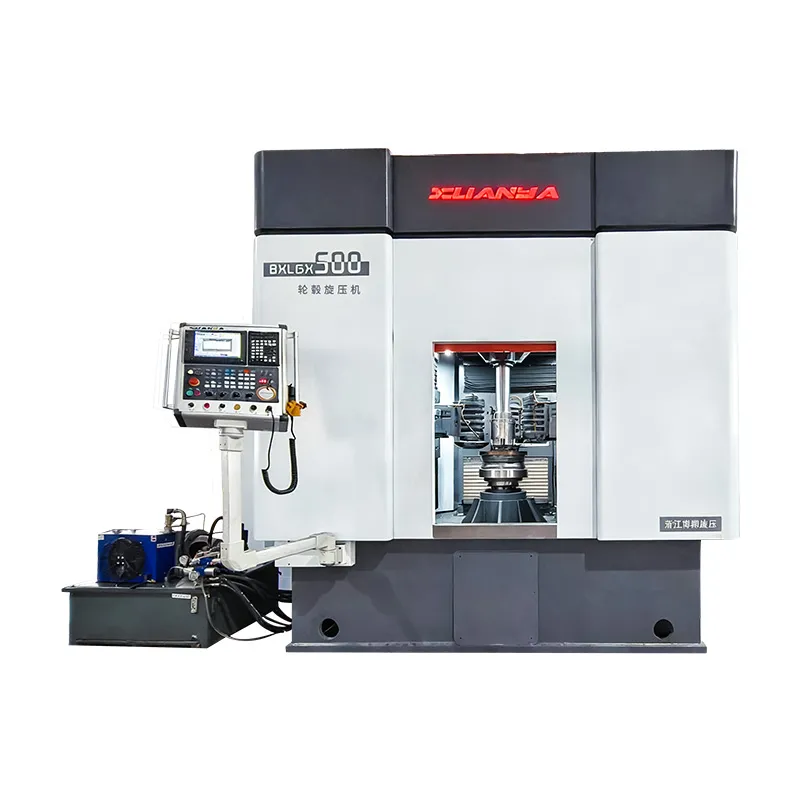
Single Roller vs Multi Roller Automatic Spinning Machine
Choosing the right Automatic Spinning Machine is not simply a matter of comparing roller quantities. Textile manufacturers must also consider yarn quality, production capacity, fiber compatibility, energy use, maintenance workload, operator skill, machine stability, and the total cost of ownership. For buyers comparing single roller and multi roller designs, Boxiang provides a useful starting
Oct. 15, 2026
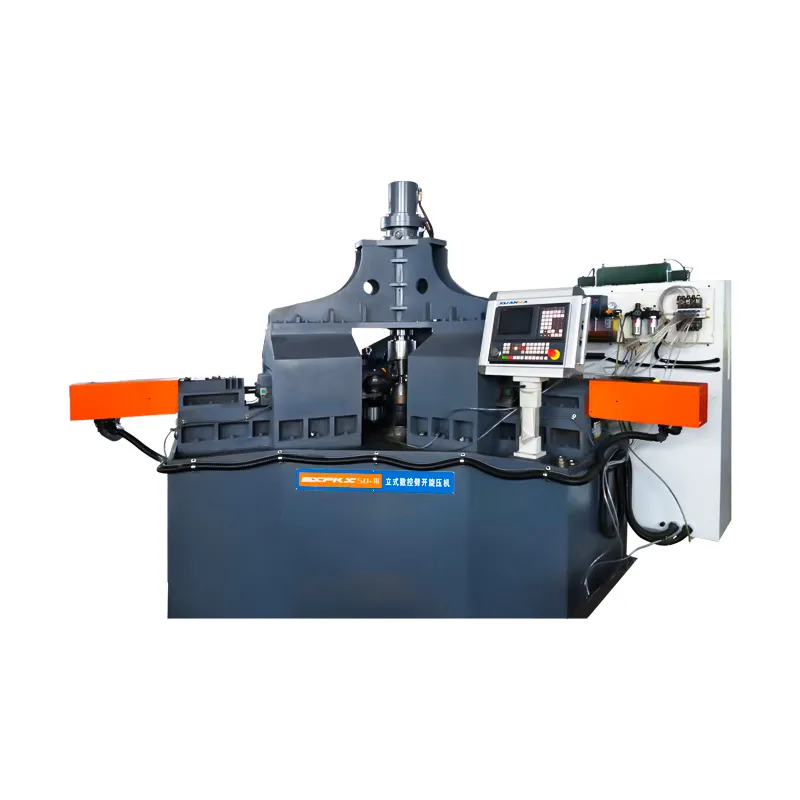
Roller Spinning Machine for Pressure Vessel Manufacturing
A Roller Spinning Machine for Pressure Vessel Manufacturing is a CNC metal-forming machine that uses one or more powered rollers to shape a circular metal blank over a mandrel. It produces pressure-vessel heads, hemispherical ends, conical sections, and other axisymmetric components with controlled wall thickness and repeatable geometry. For manufacturers, the machine can reduce welding, improve
Oct. 14, 2026
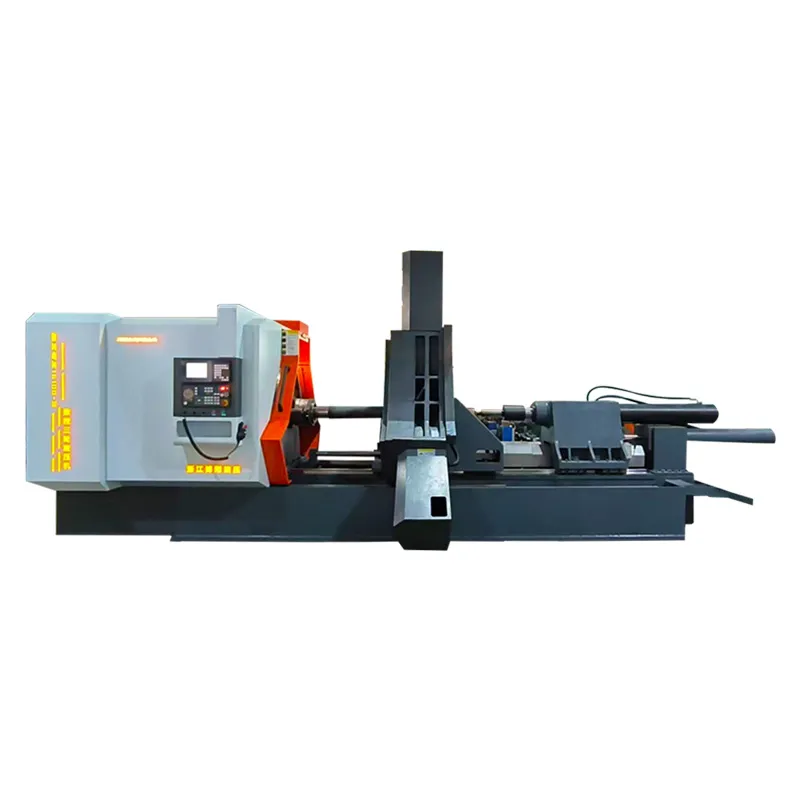
What to Look for When Buying an Automatic Spinning Machine
Manufacturers use Multifunctional CNC Spinning Machines to form round metal parts with controlled pressure instead of cutting away most of the material. This process supports repeatable production of lamps, cookware, aerospace parts, pressure vessels, and automotive components. A CNC metal spinning machine can store tool paths, control spindle speed, and repeat the same profile across many parts.
Oct. 13, 2026
Hot Products
Get the latest solutions for your business from your trusted CNC machine manufacturer
Contact Now


