

May. 19, 2026
Share
Metal spinning technology has become an essential manufacturing process in industries such as aerospace, automotive, cookware, lighting, pressure vessels, HVAC, and medical equipment. As production demands continue to increase, manufacturers often compare traditional roller spinning machines with modern CNC spinning machines to determine which solution best fits their production requirements.
Although both machines are used for metal spinning and rotational forming, there are significant differences in automation level, precision, production efficiency, labor requirements, and processing capability.
In this article, we explain the key differences between roller spinning machines and CNC spinning machines, helping manufacturers choose the right metal spinning equipment for their applications.
A roller spinning machine is a metal forming machine that uses spinning rollers to gradually shape a rotating metal blank over a mandrel.
Traditional roller spinning machines are often manually operated or semi-automatic. The operator controls roller movement and forming pressure during the spinning process.
These machines are commonly used for:
Basic cylindrical parts
Conical components
Decorative metal products
Small-batch production
Simple rotational shapes
Roller spinning machines are widely used because of their relatively low investment cost and flexible operation.
A CNC spinning machine is an advanced automated metal spinning system controlled by computer numerical control (CNC) technology.
The machine automatically controls:
Roller movement
Feed rate
Spindle speed
Forming pressure
Multi-axis motion
CNC spinning machines are designed for high-precision, high-efficiency, and repeatable industrial production.
They are widely used in:
Aerospace manufacturing
Pressure vessel production
Medical equipment manufacturing
Automotive industries
High-precision industrial components
Traditional roller spinning machines rely heavily on manual operation.
Operators must:
Control roller positioning
Adjust forming pressure
Monitor material deformation
Manage forming paths
Production quality depends greatly on operator skill and experience.
CNC spinning machines operate automatically through programmed control systems.
The CNC system manages:
Roller movement trajectories
Rotational speed
Feeding parameters
Forming sequences
Precision positioning
This greatly reduces manual intervention.
CNC spinning machines provide significantly higher automation and production consistency than traditional roller spinning machines.
Manual or semi-automatic operation may lead to:
Dimensional variation
Inconsistent wall thickness
Surface irregularities
Lower repeatability
Precision largely depends on operator experience.
CNC systems provide highly accurate and repeatable forming control.
Advantages include:
Tight tolerance control
Uniform wall thickness
Smooth surface finish
Excellent dimensional consistency
CNC spinning machines offer much higher forming precision and repeatability.
Manual operation generally results in slower production speed.
Challenges include:
Longer setup times
Slower forming cycles
Increased labor requirements
Lower batch consistency
Automated programming significantly improves production efficiency.
Benefits include:
Faster cycle times
Continuous production capability
Reduced downtime
Improved process optimization
CNC spinning machines are more suitable for high-volume and industrial-scale production.
Traditional spinning requires highly skilled operators with years of practical experience.
Operators must understand:
Material behavior
Roller pressure control
Spinning techniques
Forming sequences
Training costs can be high.
CNC systems simplify operation through automated programming.
Operators mainly focus on:
Machine setup
Program input
Monitoring production
Quality inspection
CNC spinning machines reduce dependence on highly experienced manual operators.
Traditional machines are suitable for:
Simple rotational shapes
Basic cones
Cylinders
Low-complexity components
Complex geometries may be difficult to produce consistently.
CNC systems can manufacture:
Complex contours
Multi-radius components
Aerospace parts
Thin-wall precision structures
High-accuracy symmetrical parts
CNC spinning machines are far better for complex and high-precision components.
Manual processes often create variations between batches.
Possible issues include:
Uneven dimensions
Surface inconsistencies
Different forming quality
Programmed automation ensures stable and repeatable production.
Advantages include:
Uniform product quality
Reduced defect rates
Better process stability
CNC spinning machines provide superior batch consistency and quality control.
Traditional spinning machines can be flexible for prototype and small custom projects.
Advantages include:
Easier manual adjustments
Lower programming requirements
Faster modification for simple parts
CNC machines require program development but provide greater long-term flexibility for repeated production.
Benefits include:
Digital process storage
Fast repeat setup
Automated parameter control
Roller spinning machines may be more convenient for simple one-off jobs, while CNC systems excel in repeatable industrial production.
Manual spinning operations usually require:
Skilled labor
Continuous operator involvement
Higher long-term labor costs
Automation significantly reduces labor dependency.
Advantages include:
Fewer operators required
Lower human error rates
Reduced training costs
CNC spinning machines reduce labor costs and improve operational efficiency.
Traditional spinning machines typically have lower upfront investment costs.
Suitable for:
Small workshops
Entry-level production
Limited production budgets
CNC spinning systems require higher initial investment due to:
CNC controllers
Servo systems
Automation technology
Multi-axis capabilities
Roller spinning machines are more affordable initially, while CNC machines provide higher long-term production value.
Common industries include:
Decorative metal products
Cookware manufacturing
Handcrafted metal products
Small workshops
Prototype production
Widely used in:
Aerospace manufacturing
Medical equipment production
Automotive industries
Pressure vessel manufacturing
Energy equipment production
Industrial precision components
You produce simple rotational parts
Production volume is low
Budget is limited
Manual customization is important
You operate a small workshop
You require high precision
Production volume is large
Product consistency is critical
Complex geometries are required
Automation and efficiency are priorities
As industrial manufacturing moves toward automation and intelligent production, CNC spinning technology continues to grow rapidly.
Key trends include:
Multi-axis CNC spinning
AI-assisted process optimization
Robotic loading systems
Smart factory integration
Real-time monitoring systems
Manufacturers increasingly prefer CNC spinning machines for improved productivity, quality control, and digital manufacturing capabilities.
Both roller spinning machines and CNC spinning machines play important roles in modern metal forming industries. Traditional roller spinning machines offer flexibility and lower initial investment, while CNC spinning machines provide higher precision, automation, efficiency, and production consistency.
The right choice depends on your production requirements, product complexity, budget, and long-term manufacturing goals.
For manufacturers seeking advanced precision metal forming solutions, CNC spinning technology is becoming the preferred choice across high-performance industrial sectors.

Latest News in CNC Spinning Machine
Learn More
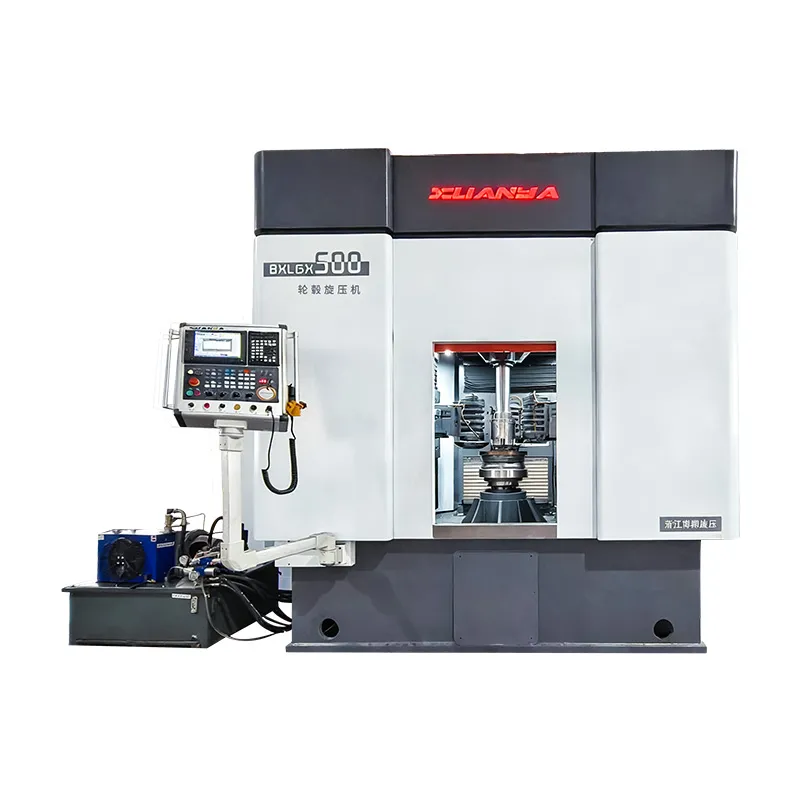
Single Roller vs Multi Roller Automatic Spinning Machine
Choosing the right Automatic Spinning Machine is not simply a matter of comparing roller quantities. Textile manufacturers must also consider yarn quality, production capacity, fiber compatibility, energy use, maintenance workload, operator skill, machine stability, and the total cost of ownership. For buyers comparing single roller and multi roller designs, Boxiang provides a useful starting
Oct. 15, 2026
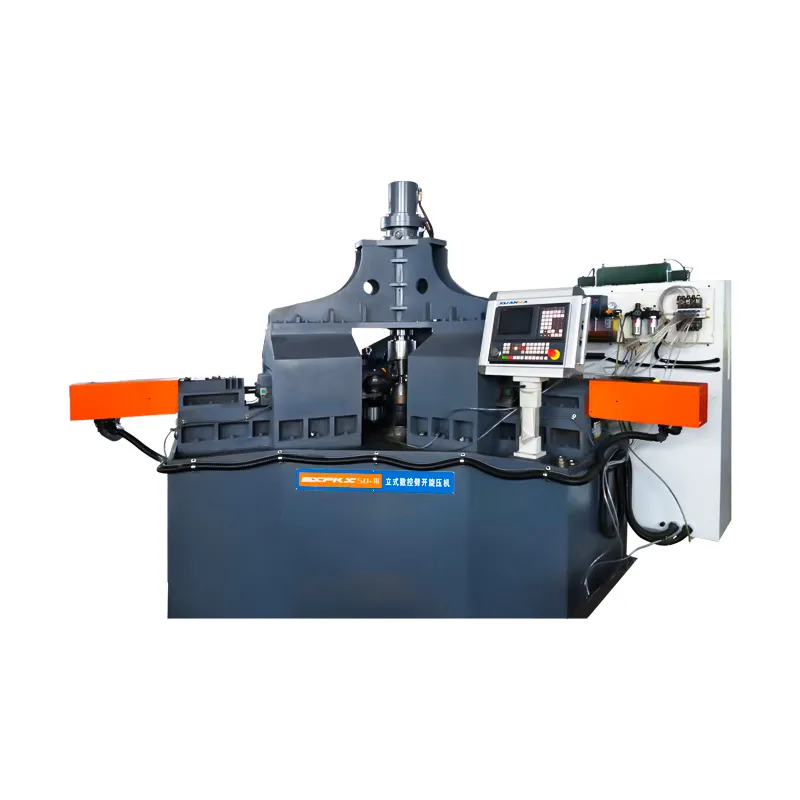
Roller Spinning Machine for Pressure Vessel Manufacturing
A Roller Spinning Machine for Pressure Vessel Manufacturing is a CNC metal-forming machine that uses one or more powered rollers to shape a circular metal blank over a mandrel. It produces pressure-vessel heads, hemispherical ends, conical sections, and other axisymmetric components with controlled wall thickness and repeatable geometry. For manufacturers, the machine can reduce welding, improve
Oct. 14, 2026
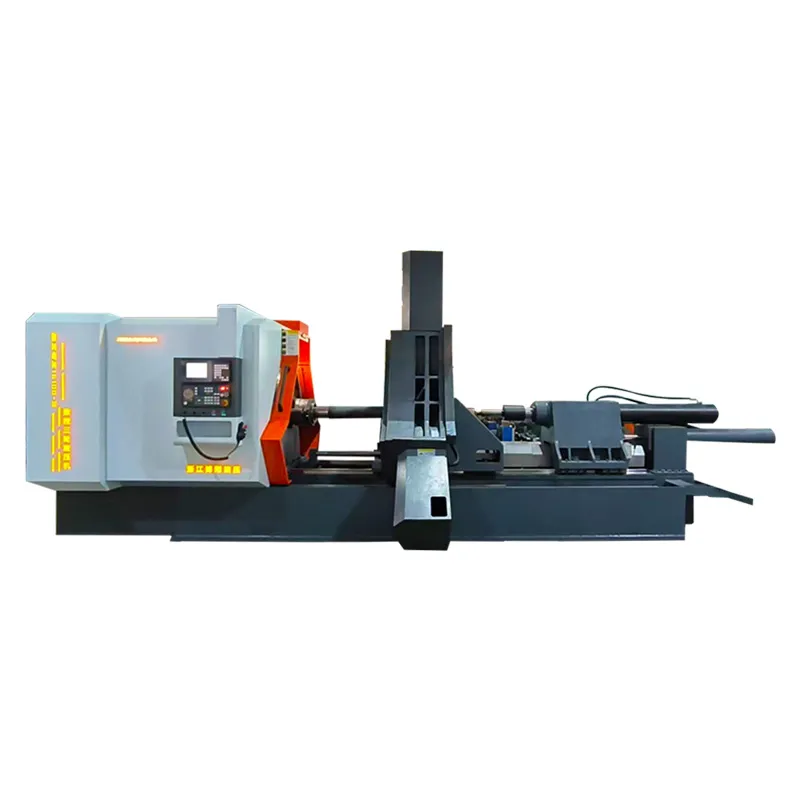
What to Look for When Buying an Automatic Spinning Machine
Manufacturers use Multifunctional CNC Spinning Machines to form round metal parts with controlled pressure instead of cutting away most of the material. This process supports repeatable production of lamps, cookware, aerospace parts, pressure vessels, and automotive components. A CNC metal spinning machine can store tool paths, control spindle speed, and repeat the same profile across many parts.
Oct. 13, 2026
Hot Products
Get the latest solutions for your business from your trusted CNC machine manufacturer
Contact Now


