

Oct. 15, 2026
Share
Choosing the right Automatic Spinning Machine is not simply a matter of comparing roller quantities. Textile manufacturers must also consider yarn quality, production capacity, fiber compatibility, energy use, maintenance workload, operator skill, machine stability, and the total cost of ownership. For buyers comparing single roller and multi roller designs, Boxiang provides a useful starting point for evaluating how each structure performs in real production conditions.

A single roller Automatic Spinning Machine generally uses one main roller or one primary roller group to control fiber movement and yarn formation. The simpler structure makes the machine easier to understand, operate, and maintain.
During production, the single roller design is often suitable for small and medium production lines, frequent product changes, and applications where the yarn specification is not extremely demanding. Its shorter material path can also make threading and cleaning faster.
However, the simpler drafting path may provide less control over fiber alignment and tension. When the buyer requires very fine yarn, high-speed operation, or highly consistent yarn evenness, the limitations of a single roller design may become more noticeable.
A multi roller Automatic Spinning Machine uses several roller sets to guide, draft, stabilize, and control the fiber strand before spinning. Each roller group can perform a different mechanical function, which allows the machine to manage fiber tension and drafting more precisely.
This arrangement is often selected by larger factories, export-oriented producers, and manufacturers supplying customers with strict requirements for yarn count, strength, evenness, and repeatability.
The trade-off is greater mechanical complexity. A multi roller machine may require more adjustment time, more detailed preventive maintenance, and better operator training. A buyer should not pay for additional roller stages unless the production target justifies them.
Catalog prices can be misleading because two machines with similar appearances may have different motors, control systems, roller materials, production ranges, and automation levels. The following table provides a practical framework for comparing a single roller and a multi roller Automatic Spinning Machine.
| Parameter | Single Roller Design | Multi Roller Design | Buyer Consideration |
|---|---|---|---|
| Roller configuration | One primary roller group | Two or more coordinated roller groups | More roller stages normally provide finer drafting control. |
| Typical production position | Small and medium production lines | Medium and large continuous production lines | Match the machine to planned output rather than current output only. |
| Drafting control | Basic to moderate | Moderate to advanced | Important for fine yarn and demanding fiber blends. |
| Yarn evenness | Acceptable for general applications | Usually more consistent when correctly adjusted | Request test data using the buyer's actual fiber and yarn count. |
| Speed stability | Good at moderate speed | Better suited to sustained higher speed | Check performance after continuous operation, not only during a short test. |
| Fiber compatibility | Best with standard and relatively easy-to-process fibers | Better for mixed, fine, short, or more sensitive fibers | Confirm the compatible fiber length, fineness, moisture, and blend ratio. |
| Control system | Basic control panel or standard inverter | More sensors, programmable controls, and monitoring options | Advanced controls are valuable only when operators can use them correctly. |
| Installation space | Usually smaller | Usually larger | Include access space for maintenance and material handling. |
| Initial investment | Lower in most cases | Higher in most cases | Compare output, waste, labor, and maintenance over the full service life. |
| Maintenance workload | Lower and easier to perform | Higher because more rollers and sensors require inspection | Ask for a maintenance schedule and spare parts list. |
| Operator training | Shorter learning period | More extensive process training required | Training quality directly affects yarn quality and machine uptime. |
| Best use case | Flexible, cost-sensitive, and moderate-volume production | High-volume, quality-sensitive, and continuous production | Choose according to the factory's long-term production plan. |
Buyers should avoid relying only on nominal speed or maximum output figures. The useful production rate depends on fiber condition, yarn specification, humidity, operator skill, cleaning frequency, and the number of planned machine stops.
A machine that reaches a high speed for ten minutes may not deliver the same performance during an eight-hour shift. Continuous stability is usually more valuable than a higher peak number.
In daily use, a single roller machine normally offers quicker setup and easier product changes. Operators can often complete threading, cleaning, and basic adjustment without stopping the entire production line for a long period.
This flexibility is valuable for factories producing several yarn specifications in small batches. It can also reduce the effect of operator turnover because the control procedure is easier to learn.
The main concern is that the machine may become more sensitive to roller wear, fiber moisture, and feeding inconsistency when the buyer increases the production speed. Careful adjustment is required to prevent uneven yarn and frequent breaks.
Multi roller machines usually require more attention during startup. Roller pressure, drafting ratio, roller alignment, material feeding, and sensor settings must work together. Once the settings are correct, the machine can provide a more stable fiber path and more repeatable yarn quality.
In actual factory use, the greatest advantage appears during long production runs. The additional roller stages can reduce the effect of irregular feeding and help maintain more consistent drafting. This benefit is especially important when the factory supplies customers with narrow quality tolerances.
Most industrial Automatic Spinning Machine systems are powered by mains electricity rather than an internal battery. Therefore, buyers should not treat battery life as a direct comparison between single roller and multi roller structures.
Battery-related performance becomes relevant when the machine includes a control panel backup battery, programmable controller memory battery, emergency monitoring unit, or an external uninterruptible power supply. In these cases, the buyer should confirm the following points:
For normal factory operation, electrical stability, motor protection, and safe restart behavior are more important than battery capacity. A buyer should evaluate the machine's power consumption, voltage requirements, motor efficiency, and protection functions instead.
The single roller structure is attractive because it reduces the entry barrier for buyers who need reliable spinning performance without a highly complex production system.
Advantages include:
Disadvantages include:
The multi roller structure requires a larger investment, but it can deliver better control when production volume and product quality justify the additional system complexity.
Advantages include:
Disadvantages include:
The correct choice depends on whether the factory values simple flexibility or process control at scale. A more advanced machine is not automatically the better machine if the production line does not use its additional capabilities.
A low purchase price can become expensive if the machine produces excessive waste, requires frequent adjustment, or consumes more labor. Conversely, a multi roller machine with a higher initial price may provide a lower cost per kilogram when it reduces waste and increases stable output.
Use the following cost categories when comparing quotations:
The buyer should request energy consumption measured under a defined production load. Maximum motor power is not the same as actual electricity consumption, so both figures should be separated in the quotation.
Single roller machines usually reduce the number of maintenance points, but they still require regular cleaning and alignment. Multi roller machines require a more disciplined maintenance system because a small defect in one roller stage can affect the entire drafting process.
Buyers should also ask whether the supplier offers remote technical support, commissioning assistance, operator training, service documentation, and a recommended spare parts package.
A single roller Automatic Spinning Machine is generally appropriate for buyers with moderate output requirements and a strong need for simple operation.
It may be a good fit for:
Before choosing this design, confirm that the target yarn quality, production speed, and fiber range are within the machine's tested operating limits.
A multi roller Automatic Spinning Machine is more suitable for buyers who need consistent output over long operating periods and who can support a more advanced production system.
It may be a good fit for:
The multi roller design is not recommended merely because it has more components. Its value appears when the production target requires better drafting accuracy, greater repeatability, or more advanced process monitoring.
When possible, buyers should compare the two designs using the same fiber blend, moisture condition, yarn count, production duration, and quality standards. This prevents a supplier from presenting results that cannot be compared directly.
The trial should include startup, normal production, speed changes, a controlled stop, and restart after a simulated power interruption. This provides a more realistic evaluation of stability than a short demonstration.
These questions help the purchasing group compare the complete production solution rather than comparing only the machine body and quoted price.
For buyers focused on low entry cost, easy operation, compact installation, and flexible batch production, the single roller design is usually the more practical option. It can provide dependable performance when the yarn range is moderate and the operating speed remains within its stable working zone.
For buyers focused on high output, long continuous operation, demanding yarn quality, and future automation, the multi roller design usually offers greater long-term potential. Its additional cost is easier to justify when improved stability, reduced waste, and better quality consistency generate measurable business value.
In either case, the purchasing group should evaluate test results, service capability, spare parts availability, operator training, energy use, and total ownership cost. A carefully matched Automatic Spinning Machine will normally deliver better results than a machine selected only by maximum speed or lowest price.
Boxiang can be included in the buyer's supplier evaluation when the project requires a practical comparison of roller configuration, production requirements, machine stability, and long-term service support. The best Automatic Spinning Machine is the one that consistently produces the required yarn quality at a sustainable operating cost.
Latest News in CNC Spinning Machine
Learn More
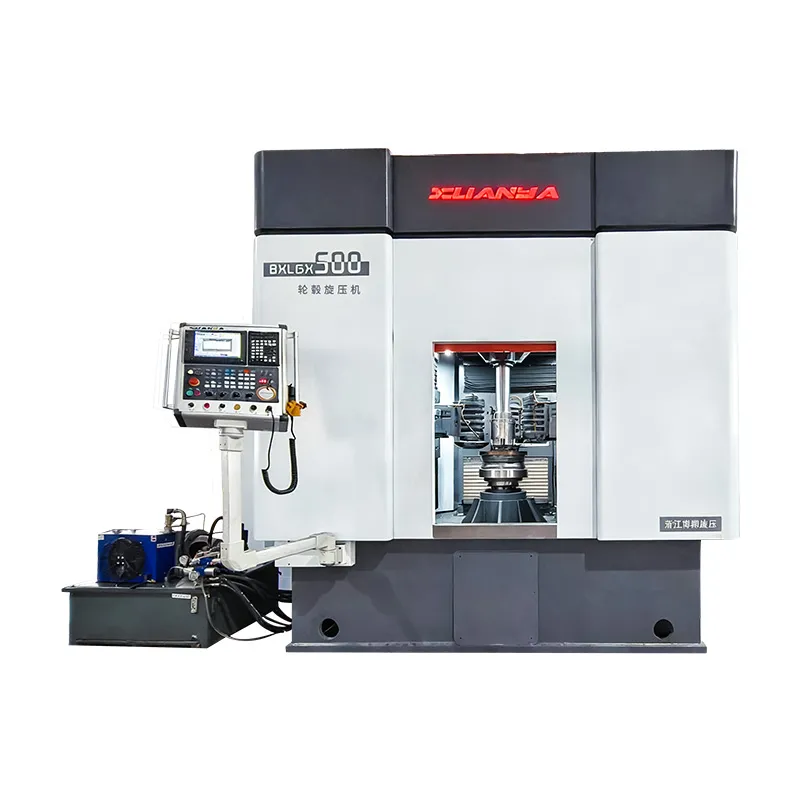
Single Roller vs Multi Roller Automatic Spinning Machine
Choosing the right Automatic Spinning Machine is not simply a matter of comparing roller quantities. Textile manufacturers must also consider yarn quality, production capacity, fiber compatibility, energy use, maintenance workload, operator skill, machine stability, and the total cost of ownership. For buyers comparing single roller and multi roller designs, Boxiang provides a useful starting
Oct. 15, 2026
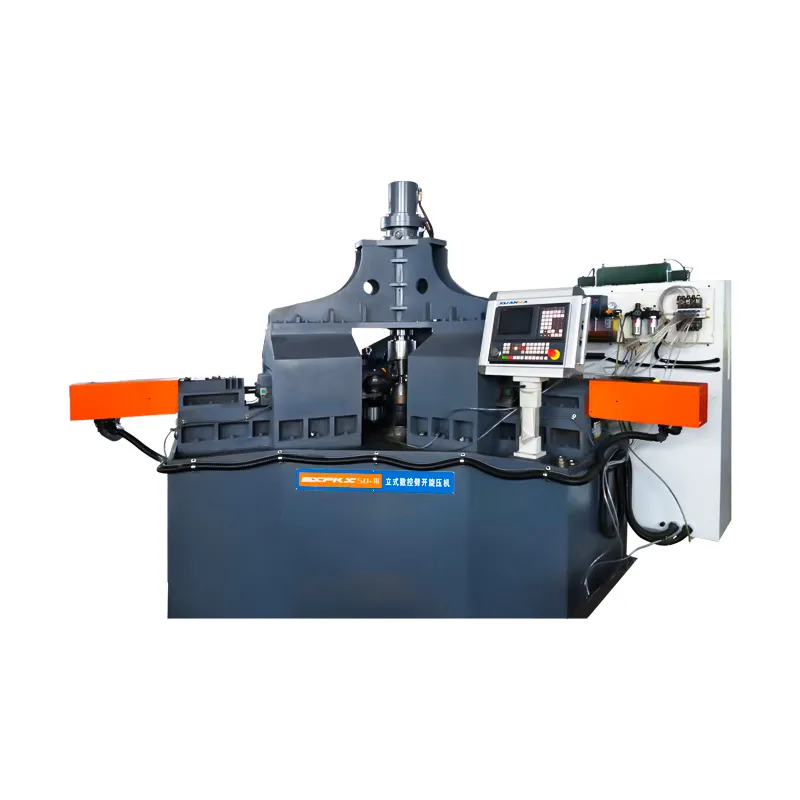
Roller Spinning Machine for Pressure Vessel Manufacturing
A Roller Spinning Machine for Pressure Vessel Manufacturing is a CNC metal-forming machine that uses one or more powered rollers to shape a circular metal blank over a mandrel. It produces pressure-vessel heads, hemispherical ends, conical sections, and other axisymmetric components with controlled wall thickness and repeatable geometry. For manufacturers, the machine can reduce welding, improve
Oct. 14, 2026
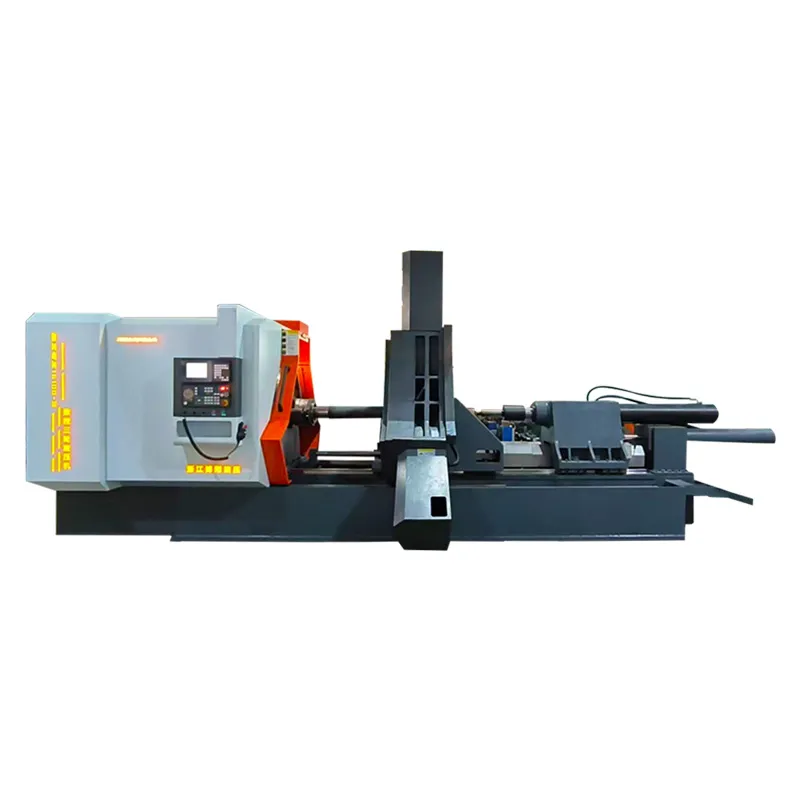
What to Look for When Buying an Automatic Spinning Machine
Manufacturers use Multifunctional CNC Spinning Machines to form round metal parts with controlled pressure instead of cutting away most of the material. This process supports repeatable production of lamps, cookware, aerospace parts, pressure vessels, and automotive components. A CNC metal spinning machine can store tool paths, control spindle speed, and repeat the same profile across many parts.
Oct. 13, 2026
Hot Products
Get the latest solutions for your business from your trusted CNC machine manufacturer
Contact Now


