

Oct. 13, 2026
Share
Manufacturers use Multifunctional CNC Spinning Machines to form round metal parts with controlled pressure instead of cutting away most of the material. This process supports repeatable production of lamps, cookware, aerospace parts, pressure vessels, and automotive components. A CNC metal spinning machine can store tool paths, control spindle speed, and repeat the same profile across many parts. For buyers comparing an automatic metal spinning machine for aluminum, the key questions are accuracy, forming force, loading method, software, safety, and after-sales support.

An Automatic Spinning Machine is a forming machine that changes a flat metal blank or preformed tube into a round, hollow, or axisymmetric part. A roller presses the material against a rotating mandrel. The mandrel defines the inside shape, while the roller follows a programmed path.
In traditional hand spinning, an operator controls the roller position and forming force. In CNC spinning, the computer controls several machine functions, including:
The term metal spinning, also called flow forming in some applications, describes a process where the blank is plastically deformed over a rotating form. The exact process name depends on the tool path, material flow, wall-thickness target, and amount of reduction.
Metal spinning is different from stamping. Stamping normally uses a press and matched dies to form many parts in one stroke. Spinning uses a rotating mandrel and roller, which can reduce tooling cost for low- and medium-volume production. It is also different from turning because the main purpose is to reshape the material rather than remove chips.
A reliable production cycle normally follows these steps.
The engineer checks the part drawing before choosing the machine. Important data includes:
Common materials include aluminum alloys, mild steel, stainless steel, copper, brass, and some nickel-based alloys. Formability varies by alloy and temper. For example, a hard-tempered sheet may require intermediate annealing, while a softer condition may allow more deformation in one pass.
The machine needs a round blank or tube with controlled thickness and diameter. Poor blank quality can cause wrinkles, cracks, eccentricity, or uneven wall thickness. The blank should be inspected for burrs, scratches, flatness, and correct material identification.
The mandrel supports the blank and gives the finished part its internal profile. The roller must have a suitable nose radius, angle, and material. A small roller radius may improve access to a tight profile, but it can also increase local stress. The correct choice depends on the material, thickness, geometry, and number of passes.
The operator or engineer creates a tool path that controls roller movement. A basic program may include a forming pass, one or more finishing passes, and a return move. The program should define safe clearance positions and controlled acceleration so the roller does not strike the mandrel or workpiece.
During the cycle, the spindle rotates the blank and the roller applies pressure. The roller gradually moves along the programmed path. A stable process keeps the material in contact with the mandrel without creating excessive thinning, buckling, or tearing.
After forming, the part is checked with calipers, a coordinate measuring machine, a profile gauge, or a wall-thickness gauge. The program may then be adjusted to correct springback, length variation, or local profile error.
For production control, record at least the part number, material batch, blank thickness, program revision, cycle time, inspection result, and operator name. This information helps identify the cause when a part falls outside tolerance.
Spinning produces reflector bodies, lamp shades, ceiling-light parts, electrical covers, and protective housings. Aluminum is often selected because it combines low density with good corrosion resistance and thermal conductivity.
Pots, pans, bowls, lids, funnels, and food-processing components can be formed from aluminum, stainless steel, or copper. The process can produce smooth circular surfaces with fewer welds than a fabricated design.
Aircraft and aerospace suppliers use spinning for domes, cones, ducts, nose sections, and other axisymmetric parts. These applications normally require strict material traceability, inspection records, and process approval. A machine’s maximum diameter alone is not enough; buyers must also confirm forming force, positional accuracy, and compatible alloys.
Typical parts include wheel components, pulleys, covers, exhaust parts, brake-related housings, and lightweight structural shells. CNC control helps maintain consistent geometry when the same part is produced across multiple shifts.
Spinning can form hemispherical, conical, or rounded ends for tanks and industrial vessels. These parts may require welding, heat treatment, non-destructive testing, and pressure testing after forming. The machine process does not replace the applicable vessel design code or inspection procedure.
Manufacturers use spinning to produce duct transitions, fan housings, air-intake parts, and circular connectors. The process is useful where smooth internal surfaces and a low number of joints are important.
Spinning is suitable for prototypes and small batches because a mandrel can be simpler and less expensive than a large stamping die. A CNC program can also be revised when the product profile changes.
Spinning reshapes the blank instead of cutting the complete part from a solid block. The actual material saving depends on part geometry, blank design, trimming allowance, and process yield. To measure it, compare:
Material utilization = finished part mass ÷ blank mass × 100%
Record this value during a trial instead of relying on general claims such as “low waste.”
A CNC program uses the same coordinates and feed commands for each cycle. Repeatability still depends on machine condition, tool wear, blank location, material variation, and temperature. Buyers should request a sample run and measure a defined number of parts, such as 10 or 30 pieces, rather than judging quality from one sample.
When the part profile changes, the manufacturer may only need a new mandrel, roller setup, and CNC program. This can be more practical than ordering a complete stamping die for every variation.
A spun shell may be made from one blank instead of several cut and welded sections. Fewer joints can reduce leak paths and post-weld distortion. However, the final design may still require welding for flanges, fittings, or assembly features.
Surface quality depends on roller finish, lubrication, feed rate, material condition, and mandrel alignment. Ask the supplier to provide a measured roughness value, such as Ra in micrometers, when surface finish is a critical requirement.
Automatic loading, CNC tool paths, recipe storage, and alarm functions reduce the number of manual decisions in each cycle. They do not remove the need for a trained operator. Correct setup, inspection, and maintenance remain essential.
Machine selection should begin with the part, not with the largest advertised motor or diameter. Use the following checklist before requesting a quotation.
| Buying factor | What to check | Why it matters |
|---|---|---|
| Maximum part diameter | Confirm the usable forming diameter, not only the maximum swing diameter. | The mandrel, roller travel, and guarding may reduce the actual working range. |
| Maximum part length | Check Z-axis travel and clearance around the mandrel. | A long part may require additional support or a different machine layout. |
| Material and thickness | Request the recommended range for aluminum, steel, stainless steel, copper, and other target materials. | Forming force and roller design change with material strength and thickness. |
| Spindle power and torque | Ask for rated power, rated torque, speed range, and duty cycle. | Torque affects the machine’s ability to maintain rotation during heavy forming. |
| Roller force | Confirm maximum forming force and how it is measured. | A high-force application may exceed a light-duty machine’s capacity. |
| CNC control | Review axis count, program storage, simulation, alarms, and data backup. | Clear control functions shorten setup time and help protect programs. |
| Accuracy and repeatability | Ask for test results using a part similar to yours. | Catalog accuracy does not always represent real forming performance. |
| Tooling | Check mandrel materials, roller options, quick-change fixtures, and custom tooling support. | Tooling has a direct effect on profile accuracy and cycle stability. |
| Loading and unloading | Compare manual, pneumatic, hydraulic, robotic, and automatic loading options. | Automation can reduce handling time and improve operator safety. |
| Safety system | Check guards, door interlocks, emergency stops, overload protection, and safe access. | Rotating parts and forming rollers create serious pinch and entanglement hazards. |
| Service and spare parts | Confirm response time, remote support, training, manuals, and replacement-part availability. | A production stoppage can cost more than the original machine price. |
Use the required production quantity to estimate machine capacity:
Required machine hours = annual part quantity × cycle time ÷ 3,600 ÷ planned utilization
If a part has a 180-second cycle time, the factory needs 60,000 parts per year, and planned utilization is 80%, the estimated machine time is:
60,000 × 180 ÷ 3,600 ÷ 0.80 = 3,750 hours per year
This figure does not include tooling changes, maintenance, inspection, setup, or material loading. Add those activities when comparing one machine with multiple machines.
The purchase price is only one part of the budget. Include:
A practical comparison uses cost per acceptable part:
Cost per acceptable part = total production cost ÷ number of parts that pass inspection
This calculation includes scrap and rework. A lower purchase price may not produce a lower cost per part if the machine has high setup time or unstable quality.
Process parameters must be developed through trials because the best setting depends on material and geometry. The main variables are:
During a trial, change one major variable at a time where possible. Measure wall thickness at several points along the part. A simple inspection plan may include the top, middle, bottom, and transition areas, with at least two measurements around each section.
Wrinkles often result from insufficient blank support, excessive feed, low blank-holding force, or an unsuitable tool path. Check the flange design, reduce the forming load per pass, and verify mandrel alignment.
Cracking may come from excessive local strain, a sharp roller radius, hard material temper, poor lubrication, or an aggressive first pass. Use a larger roller radius, reduce the deformation per pass, or consider an intermediate heat-treatment step where permitted by the material specification.
Wall variation can be caused by blank eccentricity, mandrel runout, incorrect roller alignment, or unstable feed. Measure the blank before forming and check runout with a dial indicator or the machine’s approved inspection method.
High-strength materials can move slightly after the roller leaves the surface. A finishing pass, compensation in the CNC program, or a revised mandrel profile may improve the result. Validate the correction with multiple parts.
Scratches can come from damaged tooling, metal chips, poor cleaning, or insufficient lubrication. Clean the work area, inspect the roller and mandrel, and keep damaged tools out of production.
Vibration may indicate poor foundation stiffness, an unbalanced blank, loose tooling, excessive speed, or spindle-bearing problems. Stop the machine if abnormal noise appears and follow the manufacturer’s inspection procedure. Do not bypass guards or interlocks to investigate a rotating machine.
Safety planning should cover installation, operation, maintenance, and tool change. The machine should include suitable guarding, emergency-stop devices, interlocks, electrical protection, and clear operating instructions. The U.S. Occupational Safety and Health Administration identifies machine guarding as a method to protect workers from hazards such as points of operation, rotating parts, and flying chips.
Useful reference sources include:
These sources provide general guidance. The final machine design must also meet the laws and safety rules that apply in the country where the equipment will be installed.
Before signing a purchase order, send the supplier a complete part drawing and material specification. Ask for a forming trial using your own blank if possible. The trial should record:
Request at least one sample that passes your inspection standard. Also ask whether the supplier provides a dimensional report, CNC backup file, electrical drawings, spare-parts list, maintenance schedule, and operator training.
When reviewing Boxiang equipment, buyers should match the machine configuration to the required material, diameter, thickness, tooling, automation level, and inspection standard. A direct technical discussion with Boxiang can help confirm whether a standard model or a customized multifunctional configuration is more suitable.
Follow the supplier’s maintenance manual for exact intervals. A maintenance log should include the date, task, measurement, technician, and corrective action.
Many machines can form aluminum, mild steel, stainless steel, copper, brass, and other ductile metals. The permitted range depends on tensile strength, elongation, thickness, diameter, roller force, spindle torque, and tooling. Always confirm the material grade with a forming trial.
CNC spinning is usually more suitable for repeat production, complex profiles, data recording, and consistent cycle control. Manual spinning can be useful for prototypes, craft work, and small custom parts. The best choice depends on production volume, tolerance, budget, and operator skill.
Yes, within the machine’s working envelope. Different parts may require different mandrels, rollers, fixtures, and CNC programs. Check the maximum diameter, length, thickness, tool clearance, and changeover time before assuming that one machine can make every product.
Accuracy is application-specific. It depends on machine structure, spindle and axis performance, tool design, material springback, blank consistency, and inspection method. Ask for measured results from a part with a similar diameter, thickness, and profile instead of accepting a general accuracy statement.
Cycle time depends on blank loading, clamping, spindle speed, forming passes, trimming, inspection, and unloading. A supplier should measure the complete cycle during a trial. Do not compare only the roller-contact time.
It can reduce waste compared with machining a complete part from a solid block, but the result depends on blank design and trimming allowance. Measure blank mass, finished-part mass, scrap mass, and rework rate to calculate actual material utilization.
The operator should learn machine startup and shutdown, workholding, program selection, tool inspection, emergency procedures, material handling, lubrication, basic measurement, and defect reporting. Training should be completed before independent production begins.
Prepare your part drawings, material grades, thickness range, annual quantity, tolerance, target cycle time, and automation requirements. Share these details with Boxiang and request a technical recommendation, forming trial, machine layout, tooling list, and service plan.
Start with one representative part and document its material, blank size, final dimensions, wall-thickness limits, surface requirements, and annual volume. Then compare machine capacity, forming force, spindle torque, CNC functions, tooling, safety features, cycle time, and total cost per acceptable part. Review the supplier’s test data and maintenance support before making a final decision. For a practical evaluation, contact Boxiang, request a sample trial, and read the machine user guide before installation and operation. This process gives you a clearer basis for selecting an automatic CNC metal spinning machine that fits your production goals.
Latest News in CNC Spinning Machine
Learn More
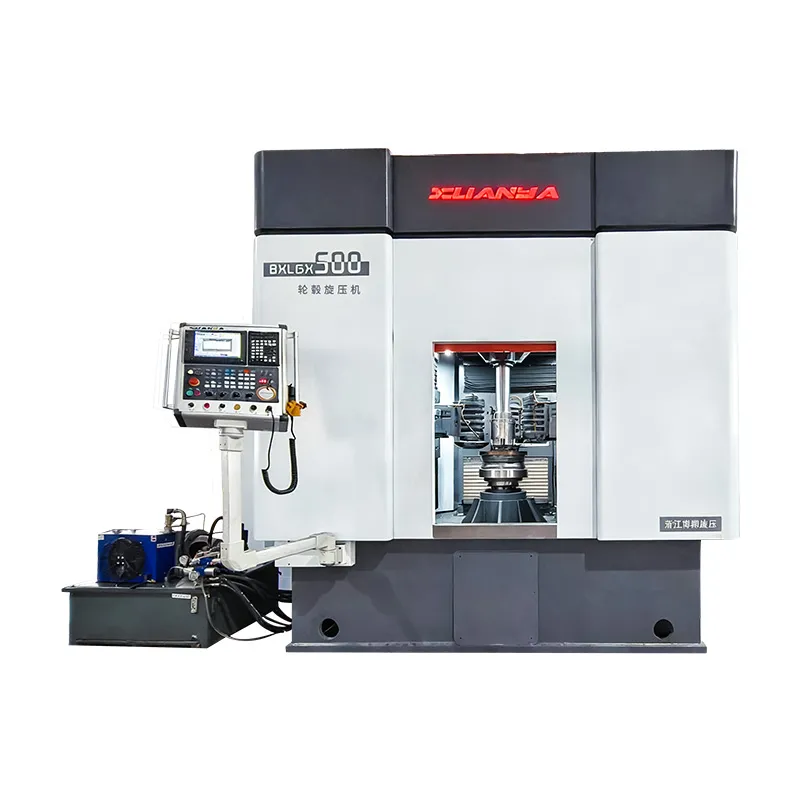
Single Roller vs Multi Roller Automatic Spinning Machine
Choosing the right Automatic Spinning Machine is not simply a matter of comparing roller quantities. Textile manufacturers must also consider yarn quality, production capacity, fiber compatibility, energy use, maintenance workload, operator skill, machine stability, and the total cost of ownership. For buyers comparing single roller and multi roller designs, Boxiang provides a useful starting
Oct. 15, 2026
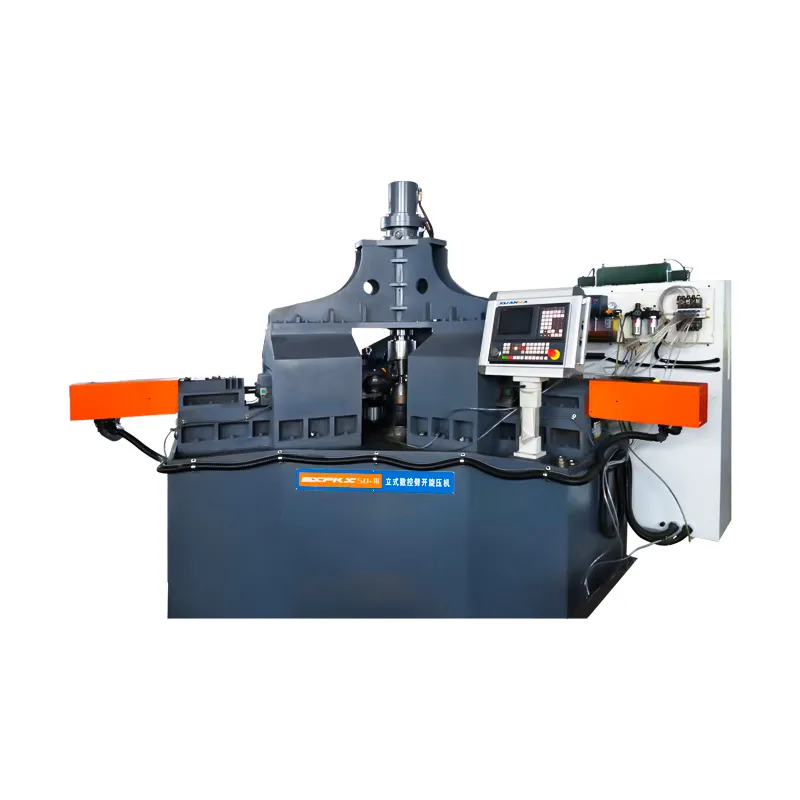
Roller Spinning Machine for Pressure Vessel Manufacturing
A Roller Spinning Machine for Pressure Vessel Manufacturing is a CNC metal-forming machine that uses one or more powered rollers to shape a circular metal blank over a mandrel. It produces pressure-vessel heads, hemispherical ends, conical sections, and other axisymmetric components with controlled wall thickness and repeatable geometry. For manufacturers, the machine can reduce welding, improve
Oct. 14, 2026
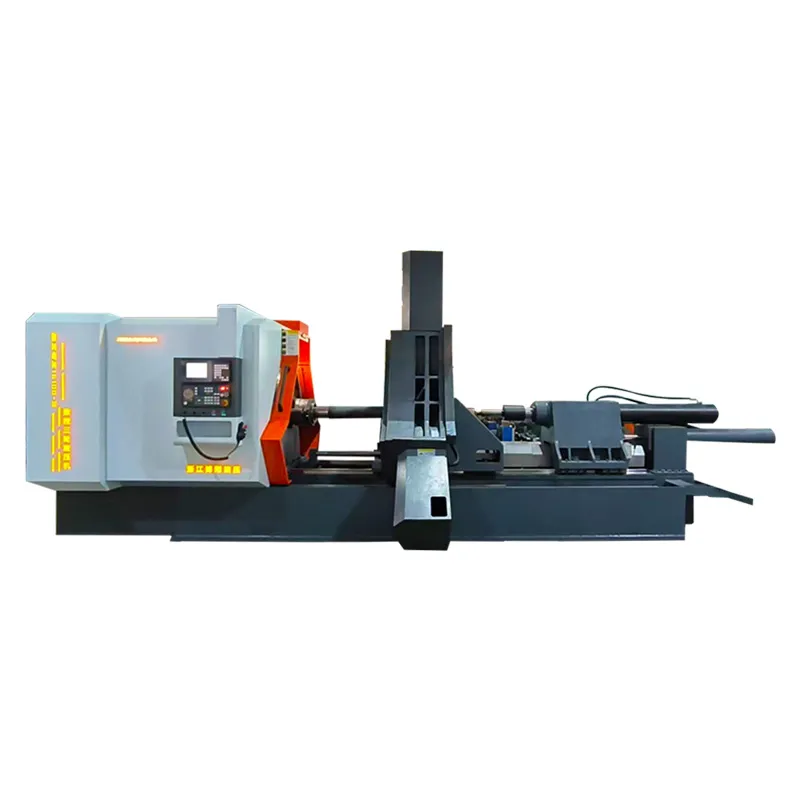
What to Look for When Buying an Automatic Spinning Machine
Manufacturers use Multifunctional CNC Spinning Machines to form round metal parts with controlled pressure instead of cutting away most of the material. This process supports repeatable production of lamps, cookware, aerospace parts, pressure vessels, and automotive components. A CNC metal spinning machine can store tool paths, control spindle speed, and repeat the same profile across many parts.
Oct. 13, 2026
Hot Products
Get the latest solutions for your business from your trusted CNC machine manufacturer
Contact Now


